
 FR
 EN
 DE
 RU
 ES
 AR
 JA
Choosing the right drawer slides for kitchen cabinets is essential for ensuring smooth operation, proper installation, and reliable performance in custom furniture projects. Furniture manufacturers and cabinet makers need to consider drawer dimensions, mounting clearance, load capacity, and extension requirements before selecting a suitable slide system.
For custom kitchen cabinet projects, the right drawer slides for kitchen cabinets must match the cabinet construction and intended storage application. A suitable specification can help reduce installation problems, improve storage accessibility, and maintain consistency during mass production. For B2B buyers sourcing cabinet hardware in bulk, confirming these requirements before ordering is an important step toward efficient manufacturing.
Why Drawer Slide Specifications Matter in Custom Kitchen Cabinets
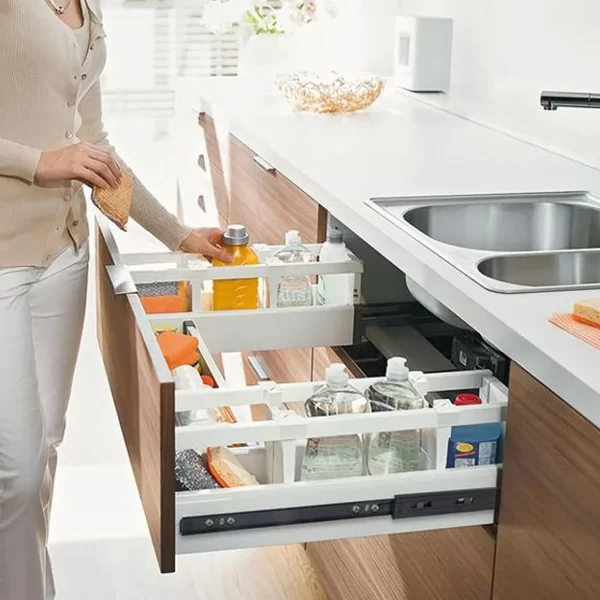
Custom kitchen cabinets often vary in drawer depth, width, storage purpose, and construction. A slide that works well for one cabinet design may not fit another without adjustments. This makes accurate specification essential when developing custom furniture or manufacturing cabinets in large quantities.
When selecting drawer slides for kitchen cabinets, manufacturers should evaluate several factors:
- Dimensional compatibility: The slide length and mounting dimensions must match the drawer and cabinet structure.
- Load requirements: The slide should support the expected weight of the drawer and its contents.
- Extension requirements: The required opening distance affects access to stored kitchen items.
- Operating performance: Smooth movement and consistent operation are important for frequently used drawers.
- Production consistency: Components should fit the approved design across repeated production batches.
For kitchen cabinet manufacturers, these considerations help establish clear technical requirements before sampling, assembly, and bulk purchasing.
Key Measurements to Confirm Before Selecting Drawer Slides
Before ordering cabinet drawer slides, confirm the actual cabinet and drawer dimensions rather than relying on a general product description. Accurate measurements help manufacturers determine whether a slide is suitable for the intended application.
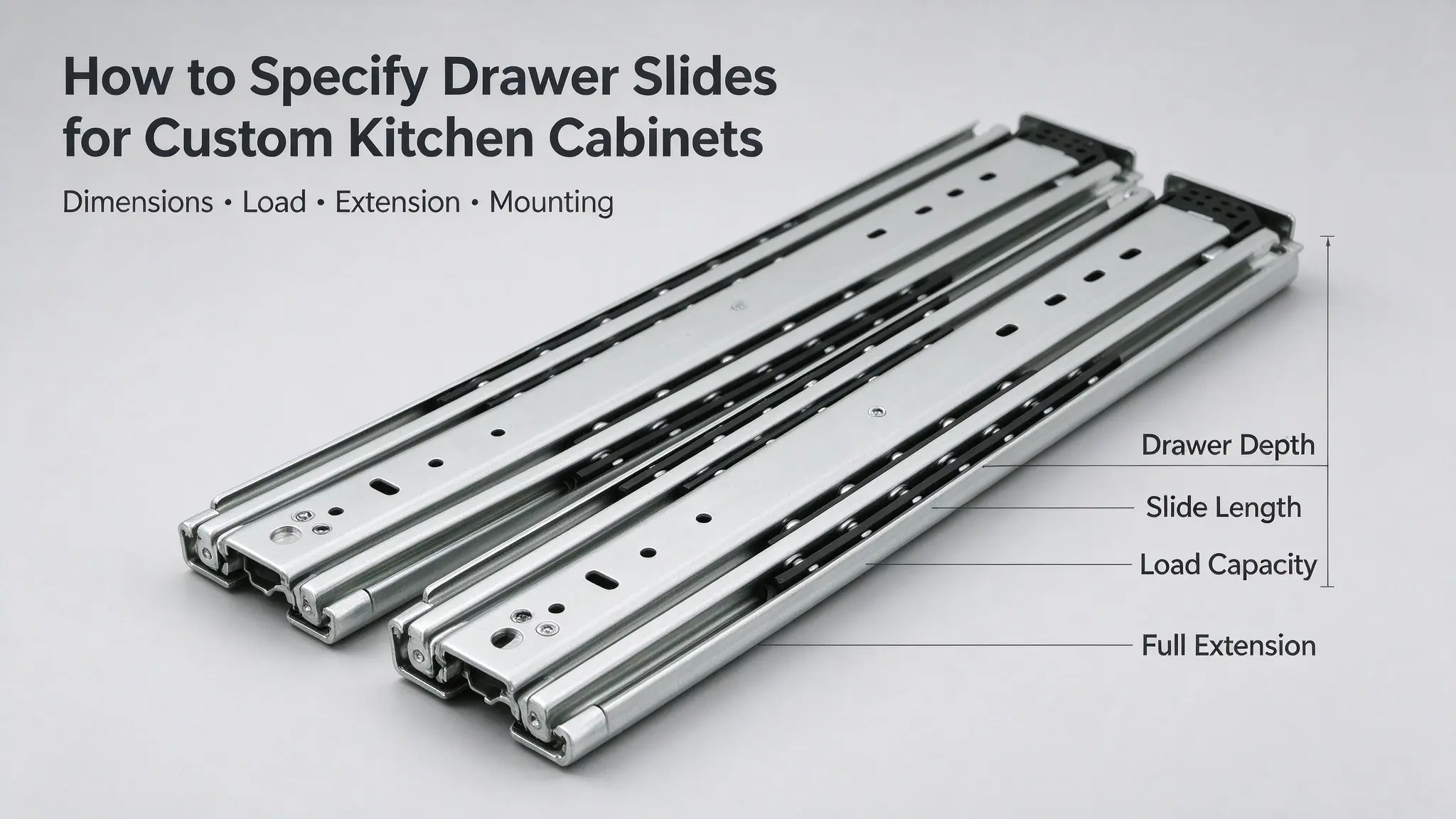
Drawer Depth and Slide Length
Drawer depth is one of the first measurements to confirm. The slide length must be compatible with the available cabinet depth and the drawer’s construction.
A slide that is too long may not fit the cabinet, while one that is too short may limit storage access or fail to meet the design requirements. Furniture manufacturers should check the usable installation depth and the slide manufacturer’s dimensional specifications before finalizing a selection.
For custom furniture drawer slides, the dimensions should be reviewed against the technical drawing and physical sample. This is especially important when cabinet designs include non-standard depths or space limitations.
Cabinet Clearance and Mounting Space
The space available around the drawer determines which mounting configuration can be used. Side-mounted slides, for example, require clearance between the drawer and cabinet sides. Other configurations may have different installation requirements.
When specifying drawer slides for kitchen cabinets, buyers should confirm:
- The available space on both sides of the drawer
- The cabinet’s internal dimensions
- The drawer box construction and side thickness
- The required mounting position
- Any obstructions that could interfere with slide movement
These details are important when a furniture hardware manufacturer supplies components for a custom cabinet design. Confirming the required clearance early can reduce assembly adjustments during production.
Drawer Width and Expected Load
Drawer width and intended use both affect slide selection. A narrow drawer used for utensils has different requirements from a wide drawer designed to store cookware or other heavy kitchen items.
Buyers should consider the combined weight of the drawer box and its contents. They should then compare this expected load with the manufacturer’s rated load capacity and any stated installation conditions.
For wider drawers, it is particularly important to follow the slide manufacturer’s guidance on load ratings, mounting arrangements, and application limits. Do not assume that a slide with a higher stated load capacity will automatically perform well in every drawer configuration.
Which Drawer Slides Suit Different Kitchen Cabinet Projects?
The best slide depends on the cabinet design, storage requirements, installation space, and target product positioning. Rather than selecting a product based on one feature alone, furniture manufacturers should compare the available options against the complete project specification.
When selecting drawer slides for kitchen cabinets, furniture manufacturers should consider the cabinet design, available mounting space, expected load, and required extension to ensure the slides meet the needs of each custom project.
Ball Bearing Drawer Slides for Everyday Cabinet Use


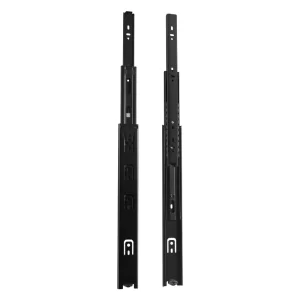
Ball bearing drawer slides are commonly considered for applications that require controlled, smooth drawer movement. Their suitability depends on the specific model, construction, load rating, and installation conditions.
For kitchen cabinet projects, buyers should check the slide’s dimensions, extension type, rated capacity, and operating requirements. They should also confirm whether the product is suitable for the expected frequency of use.
When sourcing ball bearing drawer slides wholesale, B2B buyers should evaluate the actual product specifications instead of assuming that all slides in this category offer the same performance.
Full Extension Drawer Slides for Better Storage Access
Full extension drawer slides allow a drawer to open so that more of its interior can be accessed. This can be useful in kitchen cabinets where users need to reach items stored toward the back.
For deep drawers and storage-focused cabinet designs, full extension drawer slides may help improve accessibility. However, the cabinet must provide sufficient space for the selected slide, and the product must match the drawer’s dimensions and load requirements.
Furniture manufacturers should confirm the extension specification, mounting clearance, and load rating before choosing a model for a custom project.
Matching Slide Options to Cabinet Construction
The slide configuration must also match the cabinet’s construction and design priorities. Side-mounted systems, undermount systems, and other available configurations have different installation requirements and visual characteristics.
Before choosing a product, compare:
- Cabinet and drawer construction
- Available mounting space
- Required extension
- Load and usage expectations
- Installation and adjustment requirements
- Project cost and target market
This comparison helps cabinet manufacturers narrow down suitable cabinet drawer slides without choosing a product solely because it is popular or inexpensive.
How to Match Drawer Slides to Different Cabinet Designs
The intended storage application provides another useful starting point when specifying drawer slides for kitchen cabinets. Different drawer designs may require different combinations of dimensions, load capacity, and extension.

Deep Drawers for Pots and Pans
Deep kitchen drawers are often designed to store cookware, serving dishes, or other bulky items. When specifying slides for these applications, manufacturers should pay particular attention to the expected load, drawer width, and cabinet depth.
The selected product should support the planned use within its rated capacity and installation conditions. For bulk orders, it is also worth validating the design with a representative sample before proceeding to full production.
Narrow Drawers for Utensils and Accessories
Narrow drawers used for cutlery, utensils, and kitchen accessories may have limited mounting space. In these applications, the slide’s dimensions and clearance requirements can be more important than simply choosing a higher load rating.
Manufacturers should check whether the selected slides fit the drawer construction and provide the intended opening movement without interference.
Wide Drawers for Heavy Kitchen Items
Wide drawers can place different demands on a slide system, depending on their construction, loading, and mounting arrangement. Buyers should not evaluate load capacity in isolation.
Instead, they should review the complete drawer design and follow the manufacturer’s guidance for slide selection and installation. Testing a sample under representative conditions can help identify potential fit or operating issues before production begins.
What Furniture Manufacturers Should Confirm Before Mass Production
For furniture manufacturers and kitchen cabinet manufacturers, selecting the correct product is only one part of a successful sourcing process. Specifications must also be communicated clearly and checked before bulk production.
Check Technical Drawings and Sample Fit
Provide the supplier with the relevant cabinet and drawer drawings, including dimensions, drawer construction, and mounting details. Confirm that the proposed slides match the available installation space.
Where possible, evaluate a sample in the intended cabinet design. A physical fit check can reveal dimensional conflicts that may not be obvious from a product description alone.
Confirm Load Requirements and Operating Performance
Clearly define the intended drawer application, expected load, and required opening movement. Compare these requirements with the product specifications and applicable testing information supplied by the manufacturer.
If the project has specific performance expectations, agree on the evaluation criteria before mass production. This helps both parties assess the product against the same requirements.
Maintain Consistency Across Bulk Orders
Consistency matters when the same slide model will be used across a production run or multiple cabinet projects. Buyers should confirm the approved product specification, model number, dimensions, and relevant quality requirements.
For wholesale drawer slides orders, it is useful to establish a clear process for sample approval, product identification, packaging, and inspection. These steps help purchasing teams and production departments work from the same specifications.
When working with a furniture hardware manufacturer, communicate any changes to the cabinet design before placing repeat orders. Even a small dimensional change can affect compatibility.
Working with a Drawer Slides Manufacturer on Custom Projects
A reliable drawer slides manufacturer should be able to provide clear product specifications and help buyers evaluate suitable options for their applications. For custom kitchen cabinet projects, effective communication is especially important because slide selection depends on the actual cabinet design.
Before requesting a quotation, B2B buyers should prepare the following information:
- Cabinet and drawer dimensions
- Drawer depth, width, and construction details
- Expected load and intended application
- Required extension and mounting configuration
- Estimated order quantity
- Sample, packaging, and quality requirements
Providing this information makes it easier for the supplier to assess the project and recommend products for further evaluation.
Huiso Hardware serves furniture hardware buyers seeking drawer slides and related cabinet hardware solutions. Furniture manufacturers, cabinet makers, and wholesale distributors can discuss their project requirements with the Huiso team to identify suitable products and confirm specifications before ordering.
FAQ
How Do I Choose Drawer Slides for Kitchen Cabinets?
To choose drawer slides for kitchen cabinets, confirm the drawer depth, width, expected load, cabinet clearance, and required extension. Compare these measurements with the slide manufacturer’s specifications and test a sample in the intended cabinet where possible. Furniture manufacturers should also verify that the selected product is suitable for the planned application before ordering in bulk.
Are Full Extension Drawer Slides Suitable for Kitchen Cabinets?
Yes, full extension drawer slides can be suitable when the cabinet provides sufficient installation space and the product meets the drawer’s dimensional and load requirements. They allow users to access more of the drawer interior, making them useful for some kitchen storage applications.
What Should Furniture Manufacturers Check Before Ordering Drawer Slides?
Furniture manufacturers should check product dimensions, mounting clearance, load ratings, extension requirements, sample fit, and quality consistency. Clear specifications help reduce compatibility issues during cabinet assembly and bulk production.
Are ball bearing drawer slides suitable for custom kitchen cabinets?
They may be suitable for many cabinet applications, depending on the product’s dimensions, load rating, extension, and mounting requirements. Buyers should evaluate the specifications of the individual model rather than relying on the product category alone.
Conclusion
Selecting the right drawer slides for kitchen cabinets requires careful evaluation of drawer dimensions, mounting clearance, load capacity, extension, and intended use. For custom kitchen cabinet projects, these factors help furniture manufacturers choose compatible hardware and reduce avoidable assembly problems.
Before placing a bulk order, confirm the product specifications, review a sample, and ensure that the selected drawer slides for kitchen cabinets meet the project’s technical requirements. Contact Huiso Hardware to discuss your application and explore suitable drawer slide options for your cabinet manufacturing needs.
About Huiso Hardware
Quincaillerie Huiso provides furniture hardware solutions for manufacturers and wholesale buyers. If you are sourcing drawer slides for kitchen cabinets or developing a custom furniture project, contact the Huiso team to discuss your technical requirements and request product information.