
 EN
EN  FR
FR  DE
DE  RU
RU  ES
ES  AR
AR  JA
JA Introduction
In the modern furniture industry, the performance of hinges, drawer slides, and other hardware components determines the overall durability and quality of cabinets, wardrobes, kitchens, and office furniture. Among all testing methods, Salt spray testing is one of the most widely used and reliable ways to evaluate corrosion resistance. This test simulates harsh environments—such as humidity, salt-rich air, sweat, and kitchen vapors—to assess how long a hardware product can maintain its structural integrity and appearance.
For manufacturers, importers, project contractors, and furniture brands, Salt Spray Testing is essential for ensuring consistent product strength and long-term customer satisfaction. This article provides a comprehensive explanation of Salt Spray Testing, its importance, test standards, and how companies can use it to choose better hardware.
What Is Salt Spray Testing and Why Does It Predict Hardware Lifespan?
Salt spray testing is a corrosion test that exposes hardware to a controlled mist of 5% sodium chloride (NaCl) solution at a constant temperature of around 35°C. This environment accelerates the corrosion process, allowing manufacturers to evaluate rust resistance in a short period.
Why Salt Spray Testing Can Predict Real-World Durability
Under natural conditions, it may take months or years for corrosion to appear. With Salt Spray Testing, this process is compressed into a few hours. For example:
| Hardware Type | Natural Corrosion Time | Salt Spray Testing Result |
|---|---|---|
| Standard iron hinge | 3–6 months | Rust appears within 24–48 hours |
| High-quality plated drawer slide | 2–3 years | Passes 96 hours or more |
| Stainless steel hinge | Up to 10 years | Passes 240–480 hours |
This accelerated testing is why nearly all international brands—such as IKEA, Home Depot, and large engineering contractors—require hardware suppliers to provide Salt Spray Testing reports.
Salt spray testing not only evaluates whether the electroplating is good enough but also reveals defects in materials, coatings, or manufacturing processes.
Why Furniture Hardware Must Undergo Salt Spray Testing
1. Prevent Functional Failure Caused by Rust
Corrosion is one of the primary causes of hinge and drawer slide failure.
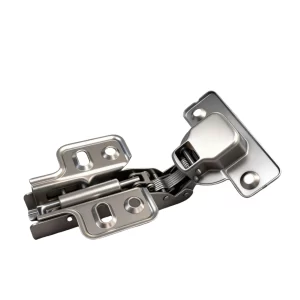
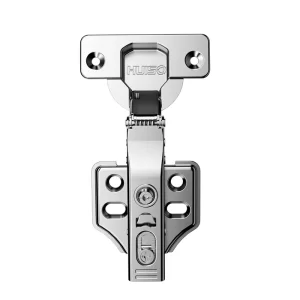
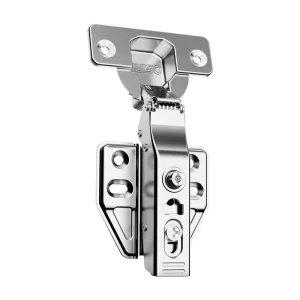
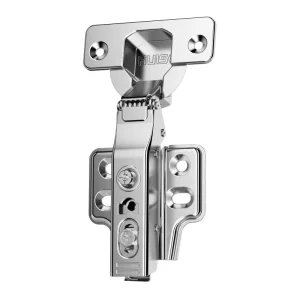
- Hinges rust → noisy, stuck, loose, or broken doors
- Ball bearing slides rust → stuck movement, uneven force, or jammed drawers
Salt spray testing allows manufacturers to detect these potential failures before production, preventing major issues in end-user environments.
2. Reduce After-Sales Problems and Costs
Industry data shows that over 40% of hardware issues are related to corrosion. By conducting Salt Spray Testing before mass production, suppliers can reduce rust-related defects by up to 60%.
This is crucial for:
- Furniture factories
- Custom cabinet manufacturers
- Real estate engineering projects
- Export brands
Long-lasting hardware directly reduces repair and replacement costs.
3. Meet International Standards for Export
Many countries and customers specify strict corrosion resistance requirements. Salt Spray Testing helps hardware meet these market demands.
Common requirements:
- ASTM B117 (USA): 48–96 hours for furniture hardware
- EN 1670 (EU): 96 hours (Grade 3) minimum
- Engineering-grade demand: 200–480 hours
Without passing salt spray testing, products cannot enter many global supply chains.
4. Improve Furniture Lifespan and User Experience
Furniture may last ten years, but only if its hardware lasts as long. High-performance hinges and slides that pass Salt Spray Testing can stay corrosion-free in kitchens, bathrooms, and humid climates, ensuring smooth operation for years.
Common Salt Spray Testing Standards (With Comparison Table)
Salt Spray Testing results are usually measured in hours. Below are the standards most widely used in furniture hardware.
ASTM B117 (USA)
The most recognized international salt spray test.
EN 1670 (European Standard)
Classifies corrosion resistance into 5 grades:
| Grade | Salt Spray Hours | Application Example |
|---|---|---|
| 1 | 24 hrs | Indoor dry environments |
| 2 | 48 hrs | Light moisture |
| 3 | 96 hrs | Standard furniture hardware |
| 4 | 240 hrs | High-humidity environments |
| 5 | 480 hrs | Extreme conditions, coastal areas |
ISO 9227 (International Standard)
Often used for export certification.
GB/T 10125 (China National Standard)
Commonly applied for domestic and export manufacturers.
All these standards use Salt Spray Testing as the core method for evaluating the corrosion resistance of hardware.
Key Factors to Consider When Performing Salt Spray Testing
1. Representative Samples Must Be Selected
Different surface treatments and materials react differently in corrosion environments. Samples must include:
- Various plating types (nickel, zinc, chrome)
- Different colors (black, gold, stainless steel finish)
- Multiple thicknesses
- Different base materials (steel, stainless steel, zinc alloy)
2. Proper Placement of Samples is Critical
Incorrect placement may cause:
- Uneven salt accumulation
- Unfair corrosion acceleration
- Inaccurate results
Hardware must be placed at a standardized angle to avoid biased outcomes.
3. Full Environmental Data Must Be Recorded
Including:
- Chamber temperature
- Salt concentration
- Spray pressure
- Humidity level
- Spray density
This ensures traceable and repeatable results.
4. Post-Test Cleaning and Evaluation Must Follow Standards
To avoid false results:
- Avoid hard wiping that damages the coating
- Rinse gently to prevent salt residue from continuing to corrode
- Use consistent light conditions for evaluation
Professional factories follow strict protocols to guarantee test accuracy.
How to Use Salt Spray Testing to Select High-Quality Hardware
1. Request Authentic Testing Reports
Reliable suppliers should provide:
- ASTM B117 reports
- EN 1670 grade certificates
- Third-party test reports (SGS, TÜV)
2. Evaluate Plating Quality Carefully
Good plating typically features:
- Uniform surface
- Smooth edges
- No bubbles or peeling
- No discoloration
These details significantly influence Salt Spray Testing results.
3. Match Hardware Grade to the Application Environment
| Application | Recommended Salt Spray Hours |
|---|---|
| Indoor furniture | 48–72 hrs |
| Kitchens / bathrooms | 96 hrs+ |
| Humid climate / coastal area | 240 hrs+ |
| Commercial engineering projects | 480 hrs+ |
4. Check Whether the Supplier Has a Stable Long-Term Client Base
Long-term cooperation with international brands or large-scale engineering projects usually indicates stable quality and strong Salt Spray Testing performance.
Conclusion
Salt Spray Testing is one of the most important and reliable corrosion resistance tests for furniture hardware. It effectively simulates harsh environments to evaluate coating quality, material durability, and long-term performance.
For manufacturers, importers, and furniture brands, choosing hardware that passes strict Salt Spray Testing is essential for reducing failure rates, extending product lifespan, and enhancing brand reputation.
In today’s competitive market, Salt Spray Testing is no longer optional—it is a necessary standard that determines whether furniture hardware can survive long-term use.
About Huiso Hardware
Huiso Hardware is a professional manufacturer of cabinet hinges, drawer slides, and custom hardware solutions. Equipped with advanced electroplating technology, automated production lines, and a complete quality inspection system, Huiso ensures that all products undergo strict Salt Spray Testing before delivery.
The company provides OEM/ODM services, customized development, and bulk production for global furniture manufacturers, distributors, and engineering contractors. Huiso is committed to delivering durable, corrosion-resistant, and high-performance hardware for modern furniture applications.