
 ES
ES  EN
EN  FR
FR  DE
DE  RU
RU  AR
AR  JA
JA 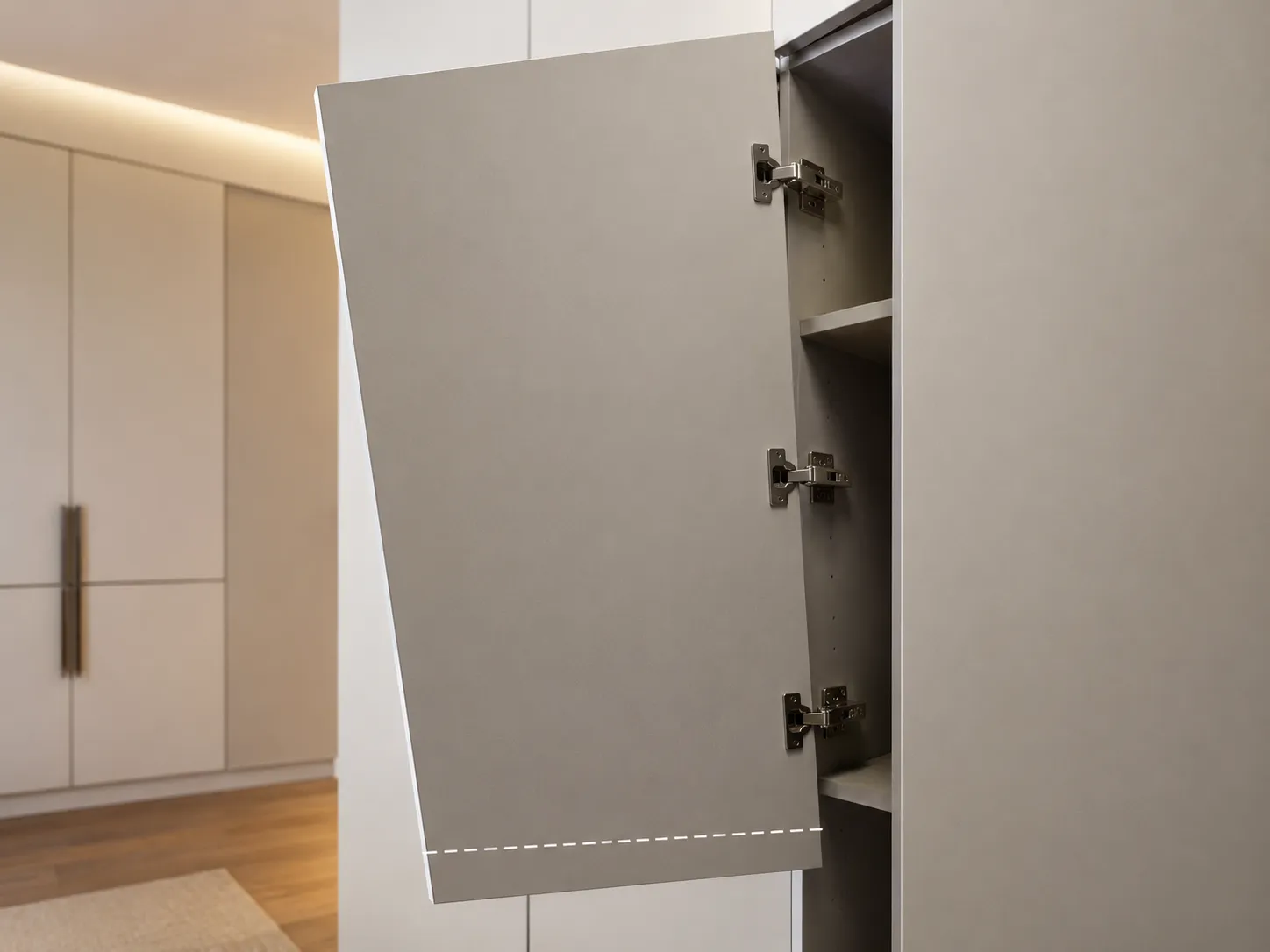
Door sagging is a common issue in cabinets, wardrobes, and furniture systems. It happens when the cabinet door gradually drops, becomes misaligned, or rubs against the cabinet frame.
For cabinet manufacturers and hardware buyers, door sagging can affect product appearance, user experience, and after-sales satisfaction. Choosing the right cabinet hinges and installation method is essential for preventing this problem.
What Is Cabinet Door Sagging?
Cabinet door sagging means the door no longer stays in its correct position after installation. It may tilt downward, create uneven gaps, or fail to close smoothly.
| Sign of Door Sagging | Possible Impact |
|---|---|
| Uneven door gap | Poor cabinet appearance |
| The door drops on one side | Difficult opening and closing |
| The hinge area becomes loose | Weak support or wrong installation |
| Hinge area becomes loose | Reduced cabinet durability |
| Soft close does not work properly | Poor user experience |
Main Causes of Door Sagging
| Cause | Explanation |
|---|---|
| Door is too heavy | The hinge cannot support the full load |
| Not enough hinges | Door weight is not distributed properly |
| Weak cabinet board | Screws cannot hold the hinge firmly |
| Incorrect installation | Hinge position or alignment is inaccurate |
| Low-quality hinges | Poor structure may deform over time |
| Long-term frequent use | Repeated opening increases stress |
| Humid environment | Board and metal parts may weaken |
Choose the Right Number of Hinges
Using enough hinges is one of the most effective ways to reduce door sagging. Taller or heavier doors usually need more hinges to distribute weight evenly.
| Door Condition | Hinge Suggestion |
|---|---|
| Small light cabinet door | Standard hinge quantity |
| Medium kitchen cabinet door | Check door weight and height |
| Tall wardrobe door | Add more hinges for support |
| Thick or heavy wooden door | Use stronger hinges |
| High-frequency cabinet door | Choose durable hinges with stable structure |
The final hinge quantity should be based on door height, weight, material, and usage frequency.
Select Hinges with Proper Load Capacity
Not all cabinet hinges are suitable for heavy or tall doors. Buyers should confirm hinge load capacity before ordering, especially for wardrobes, large storage cabinets, and commercial furniture.
| Aplicación | What to Consider |
|---|---|
| Kitchen cabinets | Daily use and smooth closing |
| Wardrobes | Tall door support |
| Bathroom cabinets | Corrosion resistance |
| Office furniture | Frequent opening and closing |
| Custom cabinets | Door size and material compatibility |
For bulk orders, sample testing is recommended before mass production.
Improve Installation Accuracy
Correct installation is just as important as hinge quality. Poor drilling or inaccurate hinge alignment can cause the door to sag even when the hinge itself is strong.
Before assembly, check:
- Hinge cup position
- Screw fixing strength
- Mounting plate alignment
- Door gap adjustment
- Vertical and horizontal balance
- Smooth opening and closing
Accurate installation helps the cabinet door stay stable for long-term use.
Use Strong Screws and Stable Mounting Plates
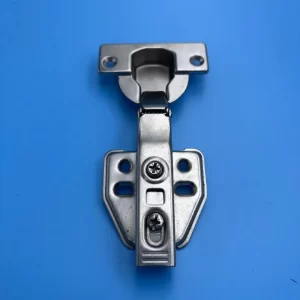
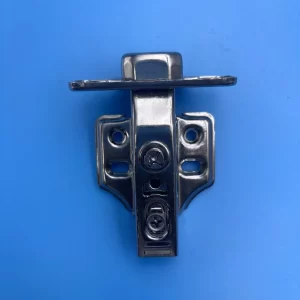
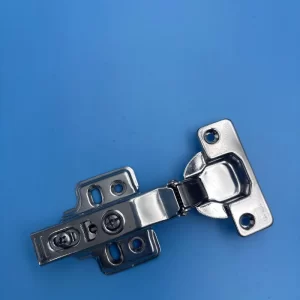
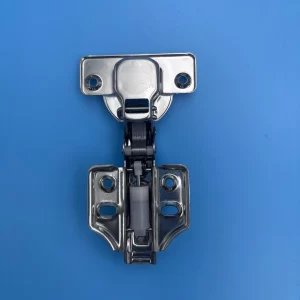
Screws and mounting plates play an important role in hinge stability. If the screws are too short, the board is too weak, or the mounting plate is unstable, the door may sag over time.
| Component | Function |
|---|---|
| Screws | Fix the hinge securely to the cabinet |
| Mounting plate | Supports hinge adjustment and stability |
| Cabinet board | Holds screws and supports door weight |
| Hinge arm | Connects and supports door movement |
A complete hinge system should be considered, not just the hinge body.
How Buyers Can Prevent Door Sagging
| Buyer Checklist | Why It Matters |
|---|---|
| Confirm door size and weight | Helps choose suitable hinges |
| Consider the usage environment | Distributes load evenly |
| Check hinge load capacity | Prevents long-term deformation |
| Test samples before bulk orders | Reduces project risk |
| Confirm screw and plate quality | Improves installation stability |
| Consider usage environment | Important for humid or high-use areas |
| Work with a reliable manufacturer | Ensures consistent product quality |
Conclusion
Cabinet door sagging can be caused by heavy doors, insufficient hinges, weak board materials, poor installation, or low-quality hardware. To avoid this problem, buyers should select the right hinge type, confirm load capacity, use enough hinges, and ensure accurate installation.
For furniture brands, cabinet factories, and wholesalers, working with an experienced hinge manufacturer can help improve product stability, reduce after-sales problems, and support long-term cabinet performance.
About Huiso Hardware
Established in 2015, Ferretería Huiso is a leading drawer slide supplier and hinge manufacturer in China. We provide OEM and ODM custom solutions for various hardware products, such as drawer slides, cabinet hinges, and furniture hinges.
Huiso Hardware is an enterprise integrating independent research and development, large-scale production, and intelligent management. We are able to quickly respond to market demand and provide high-quality hardware accessories solutions for furniture manufacturers, cabinet brands, wholesalers, and global distributors.
Related Products
-

Bulk 30 Degree Hinge For Cabinet
-
Bisagras de cierre lento para armarios a granel Bisagra de inmersión en agua de ángulo cero-H01
-
Bisagras hidráulicas a granel para armarios Bisagras de cierre automático para cocina o baño-HB1
-
Bisagras a medida de cierre suave para armarios de cocina Ángulo cero Bisagra para puerta gruesa y delgada-HB6