
 RU
 EN
 FR
 DE
 ES
 AR
 JA
Cabinet doors that sit unevenly, leave inconsistent gaps, or fail to close properly can affect both furniture appearance and everyday functionality. For furniture manufacturers, cabinet makers, and hardware distributors, choosing hinges with convenient adjustment features can help simplify installation and improve the consistency of finished cabinets.
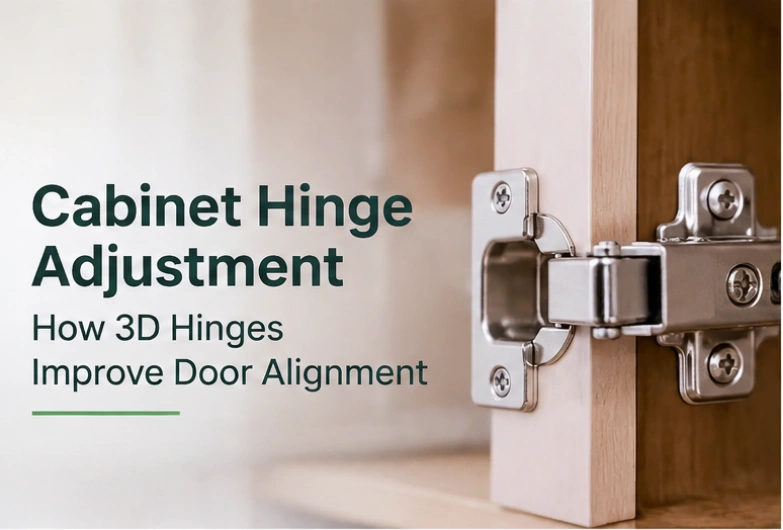
Cabinet hinge adjustment is particularly important in furniture production, where even small alignment differences can become noticeable across large batches of cabinets. Traditional hinges may offer limited adjustment options, while 3D adjustable cabinet hinges allow installers to correct door positions in three directions: vertical, horizontal, and depth.
Understanding how these adjustments work can help furniture manufacturers select suitable hinges for kitchen cabinets, wardrobes, office furniture, and other cabinetry applications.
What Is Cabinet Hinge Adjustment?

Cabinet hinge adjustment refers to the process of changing a cabinet door’s position after the hinges have been installed. It helps correct uneven gaps, misaligned door edges, and differences between adjacent cabinet doors.
During cabinet manufacturing and installation, several factors can affect door alignment, including:
- Differences in cabinet dimensions and drilling positions
- Variations in door panel thickness or weight
- Small installation errors
- Changes in door position during repeated use
- Inconsistent spacing between cabinet doors and frames
Without suitable adjustment features, installers may need to reposition hinges or make additional corrections to achieve the desired alignment.
Modern adjustable concealed hinges offer a more convenient solution. Depending on their design, they allow installers to make small positioning changes without completely removing the hinge.
For furniture manufacturers and wholesale cabinet hardware buyers, this feature can make hinge selection an important part of production planning.
How Do 3D Adjustable Cabinet Hinges Work?
3D adjustable cabinet hinges provide three-way adjustment to help installers align cabinet doors more accurately. The three adjustment directions are vertical, horizontal, and depth.
Unlike hinges with more limited positioning options, 3 way adjustable cabinet hinges are designed to address different alignment issues through their integrated adjustment screws.
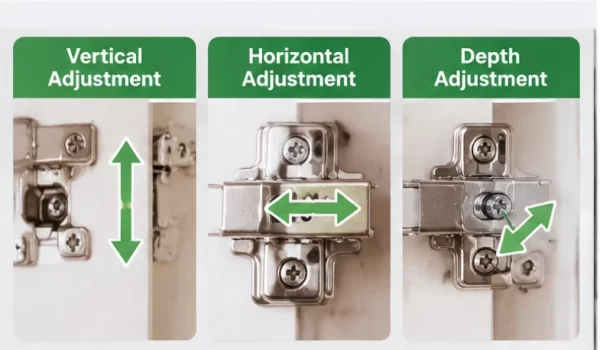
1. Vertical Adjustment: Correcting Door Height
Vertical adjustment changes the height of the cabinet door.
If one door sits slightly higher or lower than an adjacent door, vertical adjustment can help bring their top and bottom edges into better alignment.
This is especially useful for:
- Kitchen cabinets with multiple adjacent doors
- Wardrobes with tall door panels
- Cabinet installations where consistent horizontal lines matter
- Furniture production involving repeated door configurations
For cabinet manufacturers, vertical adjustment helps simplify the correction of minor height differences during final assembly.
2. Horizontal Adjustment: Controlling Side Gaps
Horizontal adjustment changes the door’s position from side to side.
It helps installers correct uneven gaps between neighboring doors or between a door and the cabinet frame.
For example, when two adjacent cabinet doors have inconsistent spacing, horizontal adjustment can help improve the gap distribution without requiring the entire hinge installation to be redone.
This function is valuable in modern kitchen and wardrobe designs, where uniform door spacing contributes to a clean and consistent appearance.
3. Depth Adjustment: Improving Door Position
Depth adjustment moves the cabinet door forward or backward relative to the cabinet frame.
It helps correct situations where a door sits too far inside or outside the cabinet body.
Proper depth positioning can improve the overall appearance of the cabinet front and help doors sit more evenly against the cabinet structure.
For furniture manufacturers, this adjustment is particularly useful when working with different cabinet constructions and door panel configurations.
How to Adjust Cabinet Hinges for Better Door Alignment
The exact adjustment procedure depends on the hinge model and its screw design. However, the following general approach can help installers understand the process when working with 3D adjustable cabinet hinges.
Step 1: Inspect the Door Alignment
Before making any changes, check the cabinet door from the front and side.
Look for:
- Uneven gaps between adjacent doors
- Doors sitting too high or too low
- Door panels positioned too far forward or backward
- Uneven contact between the door and cabinet frame
Identifying the specific alignment problem helps determine which adjustment direction is needed.
Step 2: Identify the Adjustment Screws
Examine the hinge structure and identify the screws responsible for vertical, horizontal, and depth adjustment.
Different hinge models may use different screw arrangements. Installers should refer to the manufacturer’s product instructions rather than assume that every adjustment screw works in the same way.
Step 3: Make Small Adjustments
Adjust the appropriate screw gradually instead of making large changes at once.
For example:
- Use vertical adjustment to correct door height.
- Use horizontal adjustment to improve side gaps.
- Use depth adjustment to correct the door’s front-to-back position.
Making small changes helps installers monitor the effect of each adjustment and avoid unnecessary corrections.
Step 4: Check the Door Again
After adjustment, close the cabinet door and inspect its position.
Check whether the gaps are more consistent and whether the door sits properly against the cabinet frame. If necessary, make further small adjustments until the desired alignment is achieved.
For furniture production lines, following a consistent inspection and adjustment procedure can help reduce rework and maintain product quality.
Why Does Cabinet Hinge Adjustment Matter for Furniture Manufacturers?
For furniture manufacturers, hinge adjustment is not only an installation consideration. It can also influence assembly efficiency, finished product appearance, and the consistency of large production orders.
More Consistent Cabinet Door Gaps
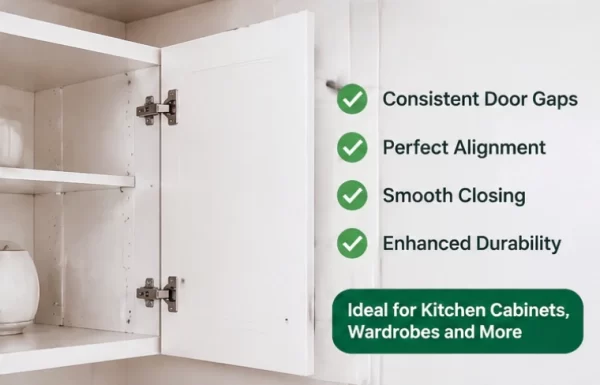
In kitchen cabinets, wardrobes, and office furniture, consistent door gaps contribute to a professional finished appearance.
3D adjustable cabinet hinges allow installers to correct minor positioning differences in three directions, helping achieve more uniform cabinet door alignment.
Greater Installation Flexibility
Cabinet projects may involve different door dimensions, cabinet structures, and installation conditions.
Three-way adjustment provides more flexibility when correcting door positions after installation. This can be particularly useful for manufacturers handling different cabinet designs and furniture specifications.
Reduced Adjustment Work During Assembly
When hinges provide accessible adjustment features, installers can make positioning corrections without repeatedly removing and reinstalling the hinge.
This may simplify final assembly and reduce unnecessary adjustment work, especially in furniture production involving multiple cabinet doors.
Better Support for Different Furniture Applications
Adjustable hinges can be used in various furniture cabinetry applications, depending on their mounting design and technical specifications.
Common applications include:
- Kitchen cabinets
- Wardrobes and bedroom furniture
- Office cabinets
- Storage cabinets
- Residential and commercial cabinetry
Furniture manufacturers should still confirm hinge compatibility with the cabinet structure, door dimensions, and required opening angle before placing bulk orders.
What to Consider When Choosing Adjustable Concealed Hinges
Selecting suitable adjustable concealed hinges requires more than checking whether a product supports three-way adjustment. Buyers should also evaluate the technical specifications and supply capabilities of the hinge manufacturer.
Door Thickness Compatibility
Door thickness is one of the first specifications to check.
The hinge must be suitable for the intended door panel thickness and cabinet construction. Using a hinge outside its recommended range may affect installation and performance.
Adjustment Range and Structure
Not all 3D cabinet hinges use the same adjustment structure or provide the same adjustment range.
Furniture manufacturers should review the product’s adjustment mechanism and confirm whether it supports the vertical, horizontal, and depth corrections required for their projects.
Material and Structural Durability
The hinge material affects its strength and suitability for different furniture applications.
Cold-rolled steel is commonly used in furniture hardware manufacturing. Buyers should also consider manufacturing consistency, surface quality, and quality control when evaluating a cabinet hinge supplier.
Opening Angle and Closing Function
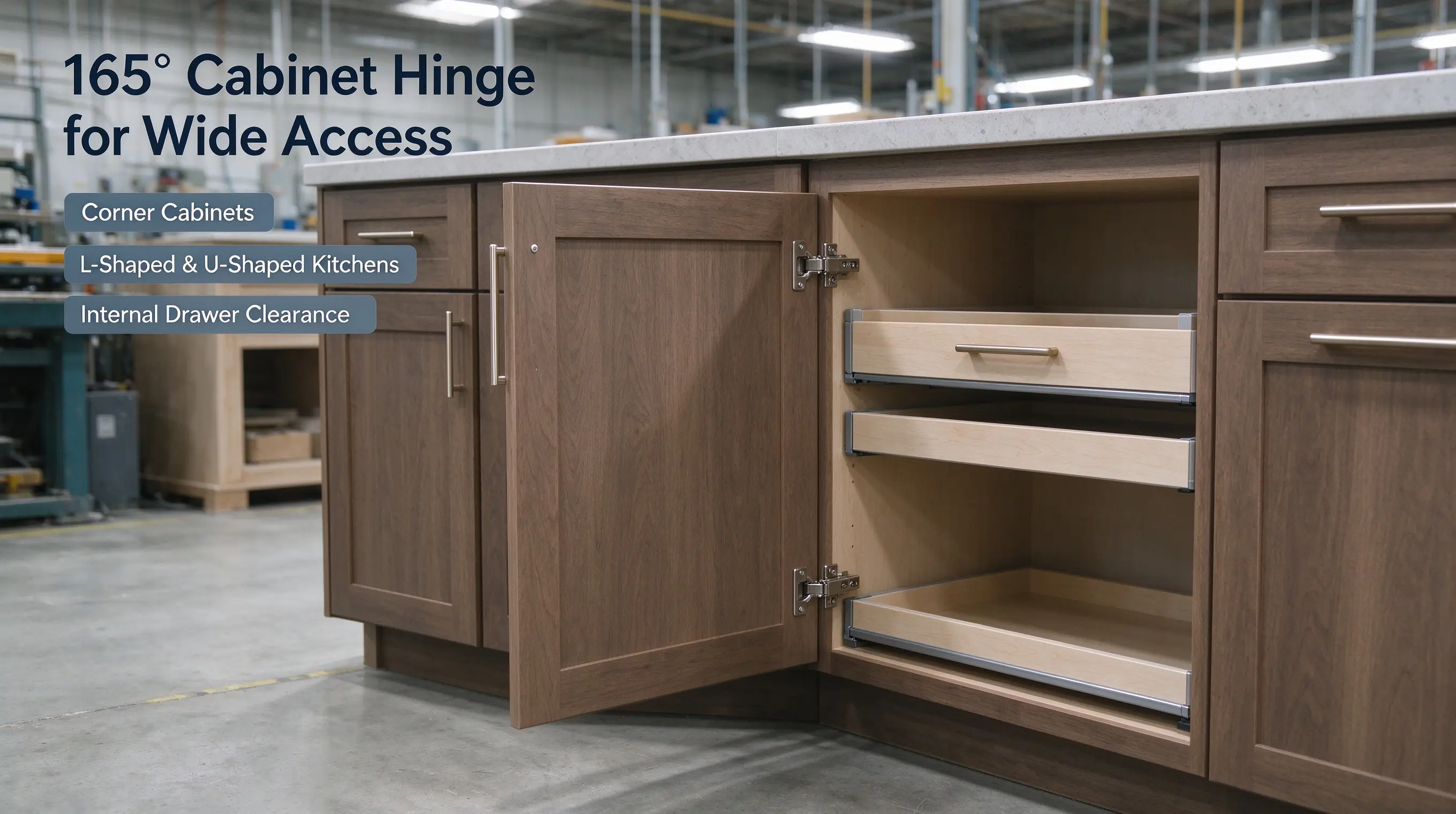
The opening angle determines how far a cabinet door can open, while the closing mechanism influences the user experience.
For projects requiring quieter operation, soft-close hinges with hydraulic damping can be a suitable option. Buyers should confirm the actual closing performance and compatibility with their cabinet designs.
Wholesale Supply and Manufacturer Support
For distributors, importers, and furniture manufacturers, product specifications are only part of the purchasing decision.
A reliable furniture hinge manufacturer should also provide:
- Consistent product quality across bulk orders
- Clear technical specifications
- Stable production and delivery arrangements
- Suitable packaging and branding options
- Responsive support for product selection and order requirements
These factors are important when sourcing adjustable concealed hinges for long-term furniture production or wholesale distribution.
Huiso 3D Damping Hinges for Wholesale Furniture Projects
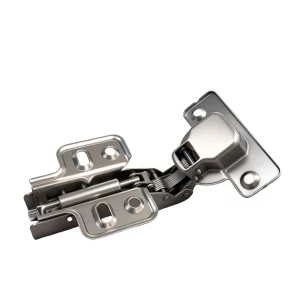
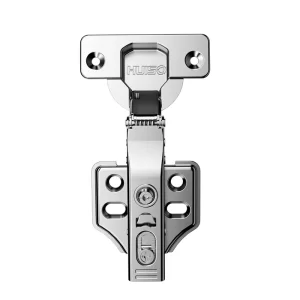
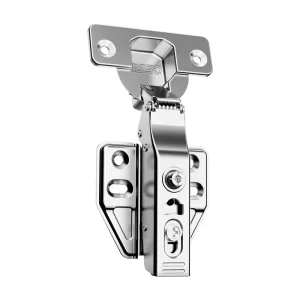
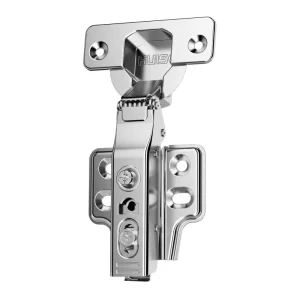
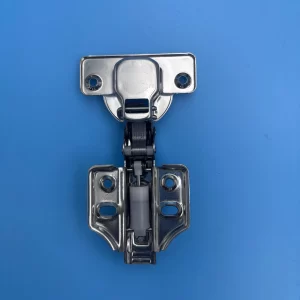
For furniture manufacturers and cabinet hardware distributors looking for adjustable soft-close solutions, Huiso offers 3D Damping Hinges designed for furniture cabinetry.
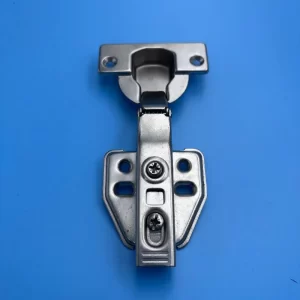
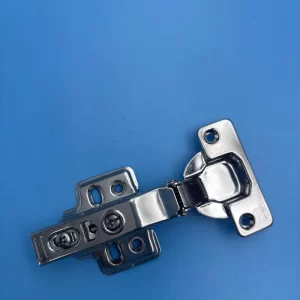
The product features integrated three-way adjustment screws, allowing installers to adjust cabinet door positions in the depth, vertical, and horizontal directions. This structure helps correct door alignment and achieve more consistent gaps during installation.
Key product specifications include:
- Three-Way Adjustment: Supports depth, vertical, and horizontal adjustment for more flexible cabinet door alignment.
- Zero-Degree Soft-Close: Features a hydraulic damping system designed to provide quiet closing from a 0° starting position.
- 105° Opening Angle: Provides access to cabinet interiors for suitable furniture applications.
- Cold-Rolled Steel Construction: Made from cold-rolled steel, with a unit weight of approximately 110g ± 1g per piece.
- Door Thickness Compatibility: Designed for cabinet panels with a thickness of 16–21mm.
- B2B Supply Options: Available with polybag or bulk packing, with OEM/ODM support for customized packaging and brand logos.
These 3D adjustable cabinet hinges can be considered for kitchen cabinets, office furniture, and other furniture cabinetry projects where door alignment and soft-close performance are required.
For wholesale buyers, furniture manufacturers, and cabinet hardware distributors, reviewing the product specifications and application requirements before ordering helps ensure a suitable match for the intended project.
FAQ
What is a 3D adjustable cabinet hinge?
A 3D adjustable cabinet hinge is a furniture hinge that supports three-way positioning adjustments: vertical, horizontal, and depth. These functions help installers correct cabinet door height, side gaps, and front-to-back positioning.
What are the three adjustments on a cabinet hinge?
The three adjustments are vertical, horizontal, and depth. Vertical adjustment changes door height, horizontal adjustment controls side-to-side positioning, and depth adjustment moves the door forward or backward relative to the cabinet frame.
Why is cabinet hinge adjustment important?
Cabinet hinge adjustment helps correct uneven door gaps and alignment issues after installation. It is particularly useful for furniture manufacturers and cabinet installers who need consistent results across multiple doors and cabinets.
Are all concealed hinges 3D adjustable?
No. Concealed hinges have different structures and adjustment capabilities. Some models provide limited adjustment, while 3D adjustable cabinet hinges support vertical, horizontal, and depth positioning. Buyers should check the manufacturer’s specifications before purchasing.
What should furniture manufacturers check before buying 3D cabinet hinges?
Furniture manufacturers should check door thickness compatibility, adjustment structure, opening angle, closing mechanism, material, and product quality. For wholesale orders, supply consistency, packaging, and manufacturer support are also important considerations.
Conclusion
Cabinet hinge adjustment plays an important role in achieving consistent door alignment and a professional furniture finish. With vertical, horizontal, and depth adjustment, 3D adjustable cabinet hinges provide installers with greater flexibility when correcting cabinet door positions.
For furniture manufacturers, cabinet makers, and wholesale hardware distributors, choosing hinges with suitable adjustment features can help simplify assembly and support consistent results across different furniture projects.
About Huiso Hardware
Huiso is a furniture hardware manufacturer and supplier specializing in cabinet hinges, furniture hinges, drawer slides, and push-to-open latches. With automated production lines, strict quality control, and flexible OEM/ODM support, Huiso serves furniture manufacturers, wholesalers, and distributors worldwide.
Huiso provides 3D damping hinges with three-way adjustment, zero-degree soft-close functionality, and a 105°opening angle. Looking for a reliable cabinet hinge supplier for your next project? Contact Huiso Hardware to discuss your product requirements and wholesale orders.
Related Products
-

Bulk 30 Degree Hinge For Cabinet
-
Объемные гидравлические петли шкафа самозакрывающиеся петли для кухни или ванной комнаты-HB1
-
Пользовательские шкаф аппаратных петли гидравлического демпфирования для кухни или ванной комнаты-HB2
-
Пользовательские мягкие закрытые петли кухонного шкафа нулевого угла толстые и тонкие дверные петли-HB6